Reciprocity Treaty admits natural products free of duty
Lord Elgin and US Secretary of State William Marcy signed the treaty on June 5, 1854 (the Canadian Encyclopedia gives June 6).1,2,44
Canada and the United States have been putting tariffs on each other, and taking them off, for 172 years. The pattern in 2026 is the pattern of 1866, 1890, 1930, 1971 and 2018: an American tariff, a Canadian answer in kind, and eventually a deal that removes both. Here is every round, with the odd details that make it a story rather than a schedule.
The first free-trade deal between the two came before Canada was a country. On June 5, 1854 Lord Elgin, Governor General of the Province of Canada, and US Secretary of State William Marcy signed the Reciprocity Treaty. Its free list opened with Grain, flour, and breadstuffs, of all kinds
and ran through animals, fish, timber, lumber and coal; American fishermen got the Atlantic fisheries in return.1,2 It was to last ten years and then until a year after either side gave notice.
Notice came from Washington. Angry at British sympathy for the Confederacy and convinced the colonies would join the Union if trade were cut, Congress passed a joint resolution in January 1865 and the American minister delivered it in London on March 17. The treaty died on March 17, 1866.3,2 Sixteen months later the colonies did the opposite of joining: they confederated.
Having asked Washington repeatedly to renew reciprocity and been refused, John A. Macdonald ran the 1878 election on protection and won. The budget of March 14, 1879 raised duties on foreign manufactured goods and lowered them on raw materials for Canadian factories. It was called the National Policy, and it set the country’s tariff direction for half a century.4
The United States answered in its own time. The McKinley Tariff of October 1, 1890 put duties of close to 50% on many imports; Canadian exporters turned to Britain, and Macdonald won one more election, in 1891, campaigning against closer American ties.5 Laurier, who replaced him, gave British goods a preference in 1897 and declared that there will be no more pilgrimages to Washington
.2,6
The Tariff Act of 1930 is the law that contains Section 338, the section behind this year’s 50%. The House passed it in May 1929 and the Senate in March 1930; President Hoover signed it on June 17, 1930. It pushed the average duty on dutiable imports to about 41%.9,10 The Senate’s own historical office calls its passage among the most catastrophic acts in congressional history
.11
Canada did not wait for the signature. With the bill through Congress but not yet law, the King government’s budget of May 1930 raised duties on sixteen American products to the rates the United States charged on the same Canadian goods, covering about 30% of American exports to Canada, and widened the British preference.12,13 It was not enough to save the government. R.B. Bennett won the July 1930 election promising to use tariffs to blast a way into markets that have been closed
, called a special session of Parliament that sat from September 8 to 22, and raised duties across textiles, farm implements, electrical goods and meat, most of it American.14,15,16
The round ended the way these rounds end. In 1932 Bennett hosted the Imperial Economic Conference in Ottawa and tied Canada to Empire preference; in 1935 Mackenzie King, back in office, signed a trade agreement with Franklin Roosevelt that the President said put the two countries’ trade on a basis of mutual agreement for the first time since 1866
, and a second one followed in 1938.17,18,19 In 1947 both signed the General Agreement on Tariffs and Trade, and bilateral tariff wars went quiet for a generation.20,21
On January 16, 1965 Lester Pearson and Lyndon Johnson signed the Automotive Products Agreement at Johnson’s Texas ranch. It let qualifying manufacturers move cars and parts across the border duty-free, at a time when Canada ran a $600-million automotive trade deficit.22 It is the ancestor of the integrated auto industry that the 2025 vehicle tariffs cut through.
On August 15, 1971 President Nixon put a 10% surcharge on all dutiable imports. Canada asked for an exemption within the week; the American record says the request was, for diplomatic reasons, not flatly
turned down, only never granted. The surcharge lasted about four months and came off on December 20, 1971.23,24
American lumber producers first asked for duties on Canadian softwood in 1982, arguing that provincial stumpage fees were a subsidy; the Commerce Department said no.25,26 They asked again in 1986 and won, and Canada agreed to collect a 15% export tax itself rather than have the United States collect a duty.26 Since then the cycle has repeated roughly once a decade: duties in 1992, an agreement in 1996; duties of about 27% in 2001, an agreement in 2006 that returned more than US$4 billion in deposits; duties again from 2017, which stood at 35.19% for most producers in 2025, with a separate 10% Section 232 tariff on top since October 14, 2025.27,28,29
Brian Mulroney and Ronald Reagan signed the Canada-United States Free Trade Agreement on January 2, 1988. Like 1911, the election that followed was fought on it; unlike 1911, the free-trade side won, 169 seats to 126 for the two parties against.30,31 The agreement phased out bilateral tariffs by 1998 and was folded into NAFTA on January 1, 1994, which in turn became CUSMA on July 1, 2020.32,33,34
On June 1, 2018 the United States ended Canada’s exemption from its Section 232 tariffs: 25% on steel, 10% on aluminum.35,36 On July 1, Canada Day, Canada applied 25% to American steel and 10% to aluminum and to a list of other goods chosen to match the C$16.6 billion of Canadian exports hit. The list is worth reading in full: yogurt, roasted coffee, maple syrup, pizza and quiche, gherkins, strawberry jam, orange juice, ketchup, mustard, mayonnaise, whiskies, toilet paper, candles, refrigerators, dishwashers, washing machines, lawn mowers, boats, mattresses, sleeping bags, playing cards and ballpoint pens.36
On May 17, 2019 the two governments agreed to remove, within two days, all tariffs the United States imposed under Section 232
on Canadian steel and aluminum and all tariffs Canada imposed in retaliation
. Canada’s orders were repealed on May 19.37,38
Read the rounds together and three things repeat. The American tariff comes first: 1866, 1890, 1930, 1971, 2018, 2020, 2025. Canada answers in kind, quickly, and matched to the American measure: the 1930 budget copied US rates line by line, the 2018 list was sized to the dollar, and the 2026 order sets each product’s rate to the US rate on the same goods.12,36,42 And the round ends with both sides taking their tariffs off together: 1935, 1971, 2019, 2020, and the Canadian removal of September 1, 2025 that followed the American CUSMA exemption.43 The 2026 round is not finished, and the timeline is where it will be recorded when it is.
Dates before 1900 use the day the document was signed; a few early entries are known only to the year and are dated January 1.
Lord Elgin and US Secretary of State William Marcy signed the treaty on June 5, 1854 (the Canadian Encyclopedia gives June 6).1,2,44
Congress passed a joint resolution, approved by the President on January 18, 1865, directing notice of termination. On March 17, 1865, US Minister Charles Francis Adams delivered the notice to Earl Russell in London.3,2
Answers Jun 5, 1854: Reciprocity Treaty admits natural products free of duty
After winning the 1878 election on tariff protection, the Macdonald government announced higher duties on foreign manufactured goods in the budget of March 14, 1879, while lowering duties on raw materials used by Canadian manufacturers.4
Answers Mar 17, 1865: US gives twelve months' notice to end the Reciprocity Treaty
The McKinley Tariff became law on October 1, 1890, with duties of nearly 50 per cent on many imports.5
Finance Minister W.S. Fielding's 1897 tariff gave imports from Britain a preferential rate, initially a one-eighth reduction, raised to one-third by 1900. The higher general rates continued to apply to US goods.6,2
Answers Oct 1, 1890: McKinley Tariff raises US duties to about 50 per cent
Laurier's Liberals and the Taft administration announced a reciprocity agreement in January 1911 providing free trade in natural products and reduced duties on some other goods; the US Congress passed it.2,8,7
Answers Mar 14, 1879: National Policy tariff raises duties on manufactured imports
In May 1930, with Smoot-Hawley passed by Congress but not yet signed, the King government's budget raised duties on 16 US products to the levels the United States charged on the same Canadian goods, covering about 30 per cent of US merchandise exports to Canada, while widening British preference.12,13,9
Answers Jun 17, 1930: Hoover signs the Smoot-Hawley Tariff Act, including Section 338
The House passed the bill 264-147 on May 28, 1929, the Senate 53-31 on March 24, 1930; the conference report cleared the Senate on June 13 and the House on June 14, and President Hoover signed it on June 17, 1930.9,11,12,10
Answers Jun 17, 1930: Hoover signs the Smoot-Hawley Tariff Act, including Section 338
Bennett chaired the Imperial Economic Conference in the House of Commons chamber from July 21 to August 20, 1932.17,14
Answers Jun 17, 1930: Hoover signs the Smoot-Hawley Tariff Act, including Section 338
Mackenzie King and Franklin Roosevelt signed a reciprocal trade agreement in Washington on November 15, 1935, proclaimed December 2, 1935. Roosevelt said it put trade relations 'on a basis of mutual agreement for the first time since 1866.'18,45,2,46
Answers Sep 8, 1930: Bennett's special session raises tariffs on textiles, implements, meat
Mackenzie King visited Washington on November 17 and 18, 1938, and signed a second reciprocal trade agreement, concluded the same day as the United Kingdom-United States agreement. It was later rendered inactive by the 1947 GATT supplementary agreement.19,21,2
Answers Nov 15, 1935: First Canada-US trade agreement since 1866
On October 30, 1947, 23 nations including Canada and the United States signed the GATT at the Palais des Nations in Geneva; it entered into force on January 1, 1948.20,21
Signed January 16, 1965 at the LBJ Ranch in Texas by Lester Pearson and Lyndon Johnson, the Auto Pact allowed duty-free trade in vehicles and parts between manufacturers meeting 50 per cent Canada-US content, with production safeguards for Canada.22
On August 15, 1971 Nixon imposed a 10 per cent supplemental duty on all dutiable imports. ' The surcharge was removed December 20, 1971 after the Smithsonian Agreement, about four months later.23,24,47,48
US softwood lumber producers petitioned in 1982 for countervailing duties on Canadian lumber, arguing provincial stumpage fees were a subsidy. The US Department of Commerce rejected the complaint in 1983.26,25
After the US Coalition for Fair Lumber Imports filed a petition on May 19, 1986 seeking a 27 per cent duty and the ITC found injury on June 26, 1986, Canada signed an MOU on December 30, 1986 imposing a 15 per cent export tax on softwood lumber shipped to the US, worth roughly $600 million a year.25,26,27
Answers Jan 1, 1982: Lumber I: US producers' first countervail petition fails
Negotiators reached the deal in October 1987; Reagan notified Congress on October 3, 1987 that he intended to sign on January 2, 1988, and Reagan and Mulroney signed that day.30,32,31,49
51 per cent countervailing duty in May 1992 and the duty took effect in July 1992. Binational panels under the FTA later found against the duty, and the dispute ended with the 1996 Softwood Lumber Agreement.25,26
Answers Dec 30, 1986: Lumber II: Canada agrees to a 15 per cent export tax
Canada, Mexico and the United States signed NAFTA on December 17, 1992 and it entered into force on January 1, 1994, replacing the Canada-US FTA. NAFTA terminated June 30, 2020 and was replaced by CUSMA/USMCA on July 1, 2020.33,32
Answers Jan 2, 1988: Canada-US Free Trade Agreement signed; in force January 1, 1989
The 1996 Softwood Lumber Agreement, agreed in principle in February 1996 and signed in May 1996, set a five-year quota system with export fees above set volumes from British Columbia, Alberta, Ontario and Quebec. It expired March 31, 2001.27,26,25
Answers Jul 1, 1992: Lumber III: 6.51 per cent countervailing duty
2 per cent. The dispute produced NAFTA and WTO rulings and ended with the 2006 Softwood Lumber Agreement, under which the US returned more than US$4 billion of duty deposits.25,27,26
Answers Apr 1, 1996: 1996 SLA puts a five-year quota on Canadian lumber
An early version was signed July 1, 2006 and the agreement entered into force October 12, 2006 for seven years, later extended two years.27,26,29
Answers Jan 1, 2001: Lumber IV: combined duties above 27 per cent
US producers petitioned in November 2016; Commerce issued final determinations November 1, 2017 and duty orders in January 2018. 63 countervailing) in the sixth review announced August 8, 2025.26,29,28,50
Answers Oct 12, 2006: 2006 SLA brings nine years of managed lumber trade
On May 31, 2018 the United States announced that Canada's temporary exemption from Section 232 tariffs would end, so from June 1, 2018 Canadian steel faced a 25 per cent tariff and aluminum 10 per cent.36,35,37
6 billion of 2017 Canadian exports hit by the US tariffs.36,38,37
Answers Jun 1, 2018: US ends Canada's exemption from 25 per cent steel and 10 per cent aluminum tariffs
On May 17, 2019 the two governments agreed to eliminate, within two days, all US Section 232 tariffs on Canadian steel and aluminum and all Canadian retaliatory tariffs.37,38
Answers Jun 1, 2018: US ends Canada's exemption from 25 per cent steel and 10 per cent aluminum tariffs, Jul 1, 2018: Canada's C$16.6 billion countermeasures: whisky, ketchup, lawn mowers, playing cards
CUSMA entered into force July 1, 2020 for a 16-year term to 2036, with a joint review on the sixth anniversary.34,51,33,52
6 billion of US aluminum and aluminum-containing goods, with consultations to September 6 and a planned start of September 16, 2020; candidates included refrigerators, washing machines, bicycles, golf clubs and aluminum cans.40,41
Answers Aug 16, 2020: US re-imposes 10 per cent tariff on Canadian unwrought aluminum
Announced August 6, 2020 and effective August 16, 2020, the US restored a 10 per cent Section 232 duty on Canadian non-alloyed unwrought aluminum, citing an 87 per cent import increase between June 2019 and May 2020.39,41,40
Answers May 17, 2019: US tariffs and Canadian countermeasures lifted within two days
The people paying the 2026 tariff are not steel mills. They are stick makers, honey packers, furriers and toy makers, and their shops are open.
Toronto, Ontario · Shopify shop
Company size not establishedMain products hit
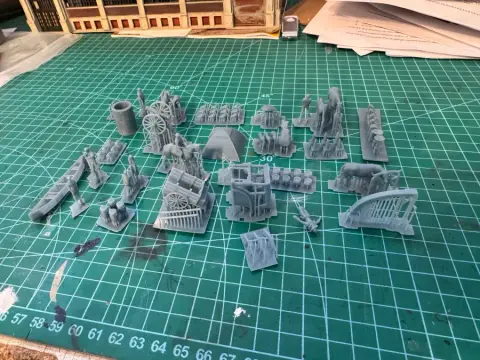
Bernard Hellen — "dr. mini" — resin-prints miniature figures and scenery for model railroaders: birds, farm and wild animals, aquatic life, people, vehicles, objects and oddities in HO, S, N and O scale, plus more than 300 MINIME figures he 3D-scans from real people, every piece printed to order and painted by hand if the buyer asks.
I've probably had about 50 order cancellations this morning alone
· winnipegsun.com, Aug 24, 2026
Victoria, British Columbia · Wix shop
Company size not establishedMain products hit
Hi, I'm Jess! I hand‑make mystery and adventure games here on beautiful Vancouver Island, BC. I create a variety of games, including adventure advent calendars, mystery whodunnits, and digital downloads. I have options for different age groups, and even one game en français! ;)
Because of these combined factors, I’ve had to pause shipping to both the US and Europe.
· mysteryinteractive.com, Sep 9, 2026
Roland, Manitoba · Online shop
Company size not establishedMain products hit
Border Hills Honey keeps bees at Roland, Manitoba and sells unpasteurized creamed honey in 250g through 3kg tubs, real fruit flavoured honey and buckwheat liquid honey, with beeswax and beeswax candles beside them.
Border Hills sells "Creamed Honey (1kg)" and "Buckwheat – Liquid Honey (500g)" packed from its own hives at Roland, Manitoba. Natural honey is HTS 0409.00.00 on the CBP Section 338 list, so a jar sent to an American buyer has carried a 50% US duty under HTS 0409.00.00 since August 22, 2026. The farm has not posted publicly about what the duty has done to its orders. · content.govdelivery.com, Aug 22, 2026
Grain, flour, and breadstuffs, of all kinds. Animals of all kinds. Fresh, smoked, and salted meats· read 2026-09-09
The US cancelled the treaty on 17 March 1866· read 2026-09-09
it will terminate and be of no further effect, as provided by the terms of the instrument, at the expiration of twelve months from the date of the reception by your lordship of this notice.· read 2026-09-09
Tariff protection for manufacturers was the rallying cry of Macdonald's Liberal-Conservative coalition in its successful 1878 general election campaign.· read 2026-09-09
The American lion and the Canadian lamb might be down together, but the lamb would be inside the lion· read 2026-09-09
No Truck or Trade with the Yankees· read 2026-09-09
I look forward to the time when the American flag will fly over every square foot of British North America up to the North Pole.· read 2026-09-09
Hawley lost re-nomination, while Smoot was one of 12 Republican senators who lost their seats in the 1932 elections· read 2026-09-09
June 17, 1930, ch. 497, title III, § 338, 46 Stat. 704· read 2026-09-09
among the most catastrophic acts in congressional history· read 2026-09-09
In May 1930 Canada imposed so-called countervailing duties on 16 products imported from the United States.· read 2026-09-09
Canada's Finance Minister introduced the Dunning Tariff as response to the Smoot–Hawley Tariff Act passed by the U.S. Congress and awaiting the President's signature.· read 2026-09-09
Bennett promised to fight vigorously to create jobs, help the millions of unemployed and 'blast' Canada back into world markets.· read 2026-09-09
blast a way into markets that have been closed· read 2026-09-09
The result of the conference was a series of bilateral agreements that would last for at least 5 years.· read 2026-09-09
The Trade Agreement which has just been signed between the United States and Canada places the trade relations between the two countries on a basis of mutual agreement for the first time since 1866.· read 2026-09-09
Prime Minister Mackenzie King | Signed a reciprocal trade agreement. Departed U.S. November 20. | November 17–18, 1938· read 2026-09-09
On 30 October 1947, the General Agreement on Tariffs and Trade (GATT) was signed by 23 nations at the Palais des Nations in Geneva.· read 2026-09-09
a 10% ad valorem supplemental duty on all dutiable articles· read 2026-09-09
for diplomatic reasons did not flatly turn down the request and assured the Canadians that we would consider their problem and that further discussions could take place.· read 2026-09-09
a tax of 15 per cent — amounting to roughly $600 million a year· read 2026-09-09
established a 15% provisional tax on all Canadian softwood lumber exports to the United States· read 2026-09-09
The SLA expired on October 12, 2015.· read 2026-09-09
Commerce determined that softwood lumber from Canada was being unfairly subsidized at rates ranging from 12.12 percent to 16.82 percent.· read 2026-09-09
10% global tariff on imports of softwood timber and lumber· read 2026-09-09
Last night, I notified the Congress that I intend to enter into a free trade agreement with Canada on January 2, 1988, contingent upon a successful completion of the negotiations.· read 2026-09-09
On election day, 21 November, the Conservatives won 169 seats, compared with 83 for the Liberals and 43 for the New Democratic Party (NDP).· read 2026-09-09
The North American Free Trade Agreement (NAFTA) terminated on June 30, 2020 and was replaced on July 1, 2020 by the United Sates – Mexico – Canada Agreement (USMCA).· read 2026-09-09
The Agreement came into force on July 1, 2020, succeeding the North American Free Trade Agreement.· read 2026-09-09
up to C$16.6 billion in imports of steel, aluminum, and other products· read 2026-09-09
The United States and Canada agree to eliminate, no later than two days from the issuance of this statement: All tariffs the United States imposed under Section 232 on imports of aluminum and steel products from Canada; and All tariffs Canada imposed in retaliation for the Section 232 action taken by the United States.· read 2026-09-09
The United States today re-imposed the Section 232 10% ad valorem additional duty on imports of non-alloyed unwrought aluminum from Canada.· read 2026-09-09
announced the imposition of tariffs of 10 per cent on imports of certain aluminum products from Canada, which will take effect on August 16, 2020.· read 2026-09-09
After consultations with the Canadian government, the United States has determined that trade in non-alloyed, unwrought aluminum is likely to normalize in the last four months of 2020, with imports declining sharply from the surges experienced earlier in the year.· read 2026-09-09
The objective of repealing tariffs on certain consumer goods is to reaffirm the importance of CUSMA as a duty-free regime, to safeguard North America's integrated supply chains and industries, and to alleviate pressure on Canadian consumers of these imported U.S. goods.· read 2026-09-09
the U.S. would have no choice but to continue the surcharge for Canada even in the event that the surcharge would be removed generally.· read 2026-09-09
refused to exempt Canada from a 10 per cent import surcharge imposed by the United States in 1971· read 2026-09-09
countervailing and anti-dumping duties on Canadian lumber have jumped from 14.5% to 35%· read 2026-09-09
The United States did not agree to renew the USMCA in its current form. As a result, the USMCA is not renewed.· read 2026-09-09
Primary sources are the documents themselves: proclamations, orders, customs notices, statutes. Secondary sources are law-firm or encyclopedia summaries we used where the original could not be read directly.
Last reviewed against the sources on 2026-09-09. Older dates rest on the Canadian Encyclopedia, the US Foreign Relations series and the treaty texts; where sources disagree by a day, the timeline entry says so.