The tariff on Canadian hockey sticks, honey and fur rests on eleven paragraphs written in 1930, in the same Act that gave the world Smoot-Hawley. No President had used them to impose a duty before July 20, 2026. This page is the law itself: what it says, where it came from, what it was used to find about Canada, and what a court might make of it.
What the section says
Section 338 of the Tariff Act of 1930, codified at 19 U.S.C. § 1338, lets the President act against a country he finds discriminates in fact against American commerce. It has three moving parts.1
Subsection (a): the finding
The President when he finds that the public interest will be served shall by proclamation specify and declare new or additional duties as hereinafter provided upon articles wholly or in part the growth or product of, or imported in a vessel of, any foreign country whenever he shall find as a fact that such country—1
The two grounds are an unreasonable charge, exaction, regulation, or limitation on American goods that is not applied to everyone else’s, or discrimination in such manner as to place the commerce of the United States at a disadvantage compared with the commerce of any foreign country.1 The comparison is with other countries, not with the United States itself; that phrase matters later.
Subsection (d): the 50% ceiling
Whenever the President shall find as a fact that any foreign country places any burden or disadvantage upon the commerce of the United States by any of the unequal impositions or discriminations aforesaid, he shall, when he finds that the public interest will be served thereby, by proclamation specify and declare such new or additional rate or rates of duty as he shall determine will offset such burden or disadvantage, not to exceed 50 per centum ad valorem or its equivalent, on any products of, or on articles imported in a vessel of, such foreign country1
The duty must offset the burden, and it may not exceed 50%. The 2026 proclamations go straight to the ceiling.2
Subsection (b): exclusion
If at any time the President shall find it to be a fact that any foreign country has not only discriminated against the commerce of the United States, as aforesaid, but has, after the issuance of a proclamation as authorized in subdivision (a) of this section, maintained or increased its said discriminations against the commerce of the United States, the President is authorized, if he deems it consistent with the interests of the United States, to issue a further proclamation directing that such products of said country or such articles imported in its vessels as he shall deem consistent with the public interests shall be excluded from importation into the United States.1
If the country maintained or increased its discrimination after a first proclamation, the President may bar its goods from entering at all. That is the power behind the import bans of September 29, 2026, the ban on Canadian alcohol among them.3,4 Subsection (c) lets him suspend, revoke, supplement, or amend any proclamation whenever he judges the public interest requires, which is how the list changed on September 8.1,5
Where it came from, and 96 quiet years
The section re-enacts Section 317 of the Fordney-McCumber Tariff of 1922, which first gave a President the power to punish, with duties of up to 50%, countries that refused equal treatment.6 It went into the Tariff Act signed June 17, 1930, and then almost nothing happened. Its use was threatened against France in 1932 and weighed against Spain, Germany, Australia and Japan in the same decade; every case was settled under other powers.7,8
July 20, 2026: the first use
Three proclamations, numbered 11046, 11047 and 11048, each make one finding against Canada and attach a list of goods to it. Together the lists ran to 554 tariff lines, about US$20 billion of imports, and took effect at 12:01 a.m. on August 22, 2026 after a three-day suspension for talks.11,12,13
Finding one: the liquor boards
Proclamation 11046 finds that beginning in March 2025, all Canadian provinces and territories halted the purchase, distribution, or retailing of U.S. alcoholic beverages, names the LCBO’s action of March 4, 2025, and concludes Canada is discriminating in fact against the commerce of the United States.14,2 Its list, 52 subheadings, covers beer, wine and spirits and also hockey sticks and plywood.12
Finding two: cheese quotas
Proclamation 11047 does not attack supply management as such. It finds that Canada lets retailers use the cheese import quota it grants the European Union under CETA but not the one it grants the United States under CUSMA:
While Canada’s eligibility criteria for the USMCA dairy TRQs, and specifically, the cheeses of all types TRQ, do not allow retailers to obtain and use TRQ quantities, the eligibility criteria for the CETA do grant retailers access to the TRQ quantity for cheese of all types.15
Proclamation 11048 finds that since April 9, 2025, Canada has maintained a 25 percent tariff rate on imports of U.S. motor vehicles that do not qualify for preferential, duty-free treatment under CUSMA, names the order by number, SOR/2025-118, and says US vehicle exports to Canada fell about 22%.16,17 Canada’s order, for its part, names the American vehicle tariff of April 3, 2025 as its reason.18 This proclamation carries 439 of the 554 lines, honey, cement, plywood, candles, wigs, dolls, fur and works of art among them, and, as two trade-law scholars noted, no motor-vehicle tariff line at all.12,10
September 8, 2026: subsection (b) is used
After Canada’s counter-tariffs took effect, five more proclamations followed. Two amend the lists from September 15. Three invoke the exclusion power for the first time, barring listed Canadian dairy, alcohol and motor-vehicle-annex goods from importation from September 29, 2026.3,19,20 The alcohol ban, Proclamation 11061, names Saskatchewan’s 50% levy on US alcohol as proof the discrimination was maintained; the alcohol chronology has both sides’ words.4,21 The motor-vehicles exclusion gives its reason as the end of negotiations:
On August 21, 2026, Canada reneged on its commitment, ceased negotiating in good faith, and did not remove the discrimination or unreasonable and unequal imposition at issue in Proclamation 11048.20
The Prime Minister’s account of the same evening is that the United States proposed new terms that were uneconomic, unfair, and undermined the net benefits to Canada.22 Both are on the timeline, dated.
Will it hold up in court?
Nobody knows, because nobody has ever asked. As of August 29, 2026 no lawsuit had been filed; the Liberty Justice Center, which won the IEEPA case, was still looking for business plaintiffs and one of its lawyers called the statute literally a blank canvas because it’s never been litigated.23,24 Trade lawyers expect a challenge at the Court of International Trade, which the Supreme Court confirmed has the tariff docket.25,26
The arguments against, as trade scholars have laid them out:
The duty must offset a burden, but no calculation of the burden was made, and the lists reach goods with no connection to alcohol, dairy or cars.10
The cheese rules apply to every country except the European Union, so they may not place the United States at a disadvantage compared with the commerce of any foreign country in the sense the statute means.10,1
Subsection (g) gives the International Trade Commission the job of ascertaining discrimination, and no Commission investigation came first.1,27
Later statutes may have displaced it, and the Supreme Court’s February 2026 reasoning about open-ended delegations of tariff power may reach it.9,26
The arguments for:
Unlike the emergency powers law, Section 338 expressly authorizes duties and caps them at 50%, which is the kind of explicit, limited delegation the Supreme Court said Congress knows how to write.9,26
The text requires no investigation and sets no time limit, and subsection (c) lets the President amend at will.28,1
Two precedents frame the odds. The emergency tariffs of 2025 were struck down 6 to 3 on February 20, 2026.29 The 10% surcharge that replaced them was held unlawful by the Court of International Trade on May 7, 2026, stayed on appeal, and expired on its own on July 24.30,31 Section 338 is the third law tried in eighteen months and the only one written with the word “duties” in it.
What this site does if it falls
Every listing here carries the tariff line that hits it, with the date it started. The 662 lines in our dataset each have an active flag and a retirement date. If a court strikes the proclamations down, or the White House revokes them, a scheduled check flips the flag and each maker’s page changes from “hit by” to “was hit by”. Nobody is delisted. The makers were real before the tariff and will be after it. How we list has the details.
Support Our Makers
The 554 lines, in person
Every maker listed here sells a product that one of the three proclamations names by code. Their shops ship inside Canada.
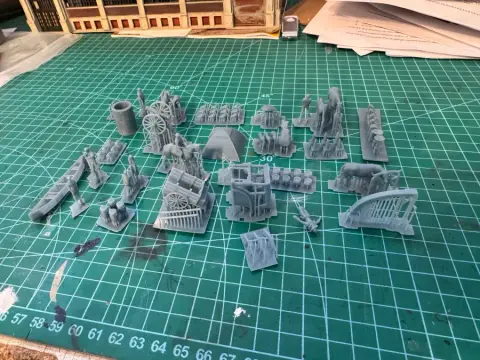
Bernard Hellen — "dr. mini" — resin-prints miniature figures and scenery for model railroaders: birds, farm and wild animals, aquatic life, people, vehicles, objects and oddities in HO, S, N and O scale, plus more than 300 MINIME figures he 3D-scans from real people, every piece printed to order and painted by hand if the buyer asks.
HTS 9503.00.00 · Dolls, toys and puzzles · 50% since Aug 22, 2026
I've probably had about 50 order cancellations this morning alone · winnipegsun.com, Aug 24, 2026
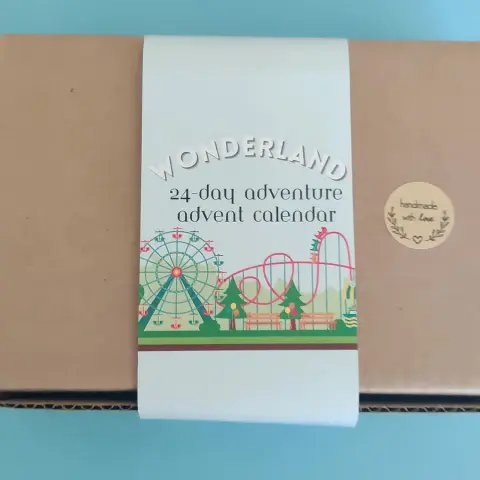
Hi, I'm Jess! I hand‑make mystery and adventure games here on beautiful Vancouver Island, BC. I create a variety of games, including adventure advent calendars, mystery whodunnits, and digital downloads. I have options for different age groups, and even one game en français! ;)
HTS 9503.00.00 · Dolls, toys and puzzles · 50% since Aug 22, 2026
Because of these combined factors, I’ve had to pause shipping to both the US and Europe. · mysteryinteractive.com, Sep 9, 2026
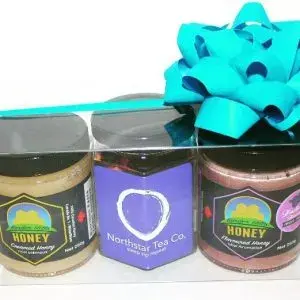
Border Hills Honey keeps bees at Roland, Manitoba and sells unpasteurized creamed honey in 250g through 3kg tubs, real fruit flavoured honey and buckwheat liquid honey, with beeswax and beeswax candles beside them.
HTS 0409.00.00 · Honey · 50% since Aug 22, 2026
Border Hills sells "Creamed Honey (1kg)" and "Buckwheat – Liquid Honey (500g)" packed from its own hives at Roland, Manitoba. Natural honey is HTS 0409.00.00 on the CBP Section 338 list, so a jar sent to an American buyer has carried a 50% US duty under HTS 0409.00.00 since August 22, 2026. The farm has not posted publicly about what the duty has done to its orders. · content.govdelivery.com, Aug 22, 2026
2.Proclamation 11046 of July 20, 2026 (91 FR 46639) · Federal Register via GovInfo, Jul 23, 2026For example, on March 4, 2025, the Liquor Control Board of Ontario (LCBO) ceased purchasing all U.S. products and canceled existing orders where contractually possible; removed all U.S. products from wholesale product catalogues and retail eCommerce sites; and removed all U.S. products from LCBO retail stores and outlets. · read 2026-09-29
6.Using History to Help Settle the Question of Presidential Tariff Powers · Reason (Volokh Conspiracy), guest post by Philip Zelikow, Sep 18, 2025 · SecondaryWhen the Republicans again raised tariffs in 1930, in the famous Smoot-Hawley law, section 338 of that bill reenacted the same section 317 penalty. · read 2026-09-09
7.Section 338: The Return of the Authority · Global Trade Alert, Jul 21, 2026 · Secondaryhas not been referenced since the 1930s and 1940s, with no record of it ever being used to impose tariffs · read 2026-09-09
8.The President's Long-Forgotten Power To Raise Tariffs · Law360 (John Veroneau and Catherine Gibson, Covington & Burling LLP), Dec 14, 2016 · SecondaryOur research has uncovered no public record relating to Section 338 since the Acheson telegram in 1949. · read 2026-09-09
12.Canada Section 338 Tariff: What the 554 Codes Actually Cover · Gateway Lines, Aug 25, 2026 · SecondaryThe covered lists run to 554 subheadings, and two of the three bear almost no relation to the sector named in the proclamation title. · read 2026-09-09
17.Proclamation 11048 of July 20, 2026 (91 FR 46663) · Federal Register via GovInfo, Jul 23, 2026Specifically, Canada imposed a tariff system on only U.S. motor vehicles and treats the commerce of foreign countries more favorably than commerce of the United States with respect to motor vehicles, as defined in Canada's United States Surtax Order (Motor Vehicles 2025), SOR/2025-118. · read 2026-09-09
21.Saskatchewan Responds to United States Trade Measures with Levy on American Alcohol · Government of Saskatchewan, Aug 27, 2026In response to the 50 per cent tariff on Canadian alcohol the United States of America (USA) enacted on August 22nd, Saskatchewan will reciprocate with a 50 per cent levy on USA alcohol imported into Saskatchewan, effective September 8th. · read 2026-09-29
Primary sources are the documents themselves: proclamations, orders, customs notices, statutes. Secondary sources are law-firm or encyclopedia summaries we used where the original could not be read directly.
Last reviewed against the sources on 2026-09-09. We are not lawyers. The statute text is quoted from the Legal Information Institute’s copy of the US Code; the proclamations from whitehouse.gov and the Federal Register.